
B2B Marketing Budget Allocation Guide

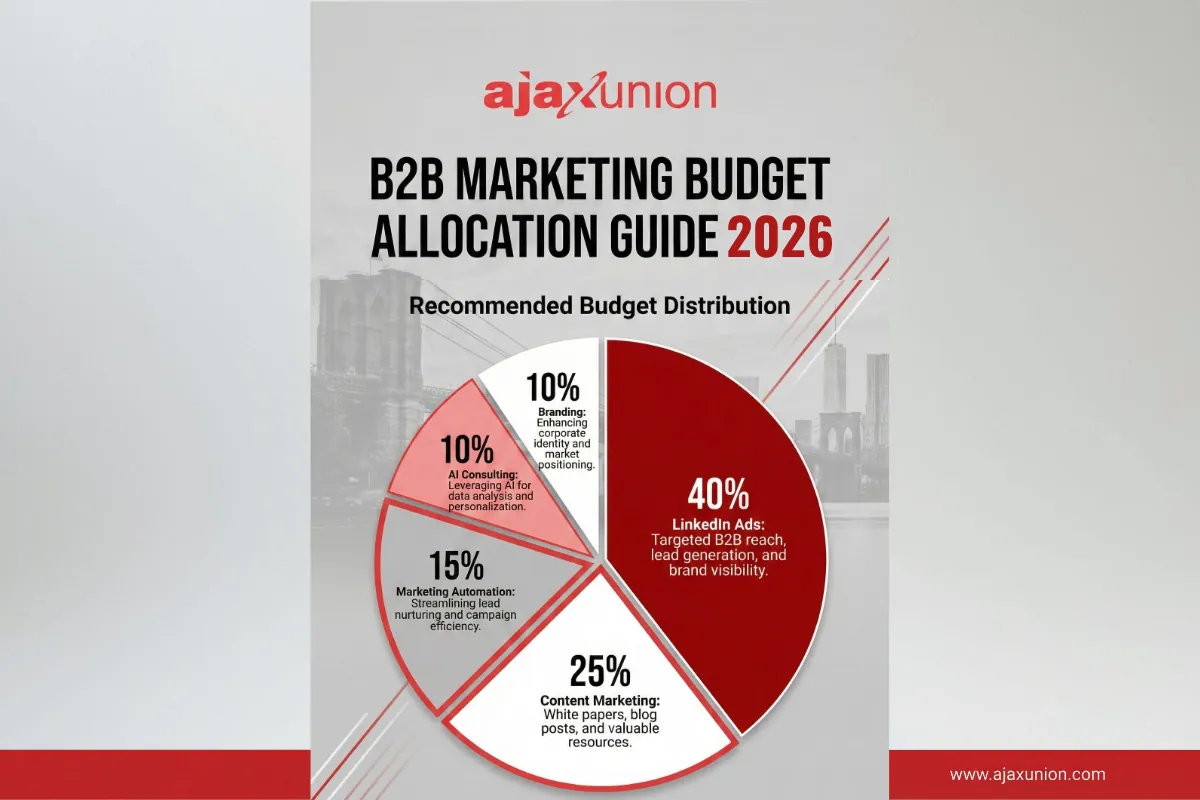
More budget doesn’t guarantee better results. Smarter allocation does.
B2B marketing budgets perform best when they’re aligned to buyer behavior, revenue goals, and realistic timelines. Yet many companies overspend on channels that feel familiar while underinvesting in the systems that create long-term efficiency.
Effective budget allocation balances short-term demand generation with long-term brand and pipeline growth.
Typically, high-performing B2B organizations allocate budget across:
- Demand capture (paid search, retargeting)
- Demand creation (content, organic, thought leadership)
- Infrastructure (CRM, automation, analytics)
Over-investing in paid channels can drive quick wins—but often at rising costs. Under-investing in content, SEO, and systems leads to dependency on spend-heavy acquisition.
Another common issue is failing to reserve a budget for optimization. Testing creative, refining targeting, and improving conversion paths require intentional investment—but they’re often the biggest drivers of efficiency.
Budget allocation should also remain flexible. Quarterly reviews allow teams to reallocate spend toward channels that prove ROI rather than sticking to assumptions.
The best B2B marketing budgets aren’t bigger—they’re better balanced.