Residential Painting Marketing Best Practices
Some months the phone won’t stop. Other months, your estimators have open calendars and you’re wondering where the calls went. A homeowner fills out your form on Saturday night, and by the time someone calls back Monday afternoon, they’ve already booked another painter. An estimate you felt great about goes quiet, and nobody follows up because everyone’s on a job site.
If that sounds familiar, the problem usually isn’t your work. It’s that the marketing around your work runs on memory and good intentions instead of a system.
The good news: most residential painting companies don’t need more tactics. They need a few basics done consistently, in the right order. A business doing the fundamentals every week will usually outperform one that tries something flashy every few months.
This playbook follows a homeowner from the first time they look for a painter to the day they refer you to a neighbor. At each stage, you’ll find what matters, how to put it in place, and a first step you can take this week.
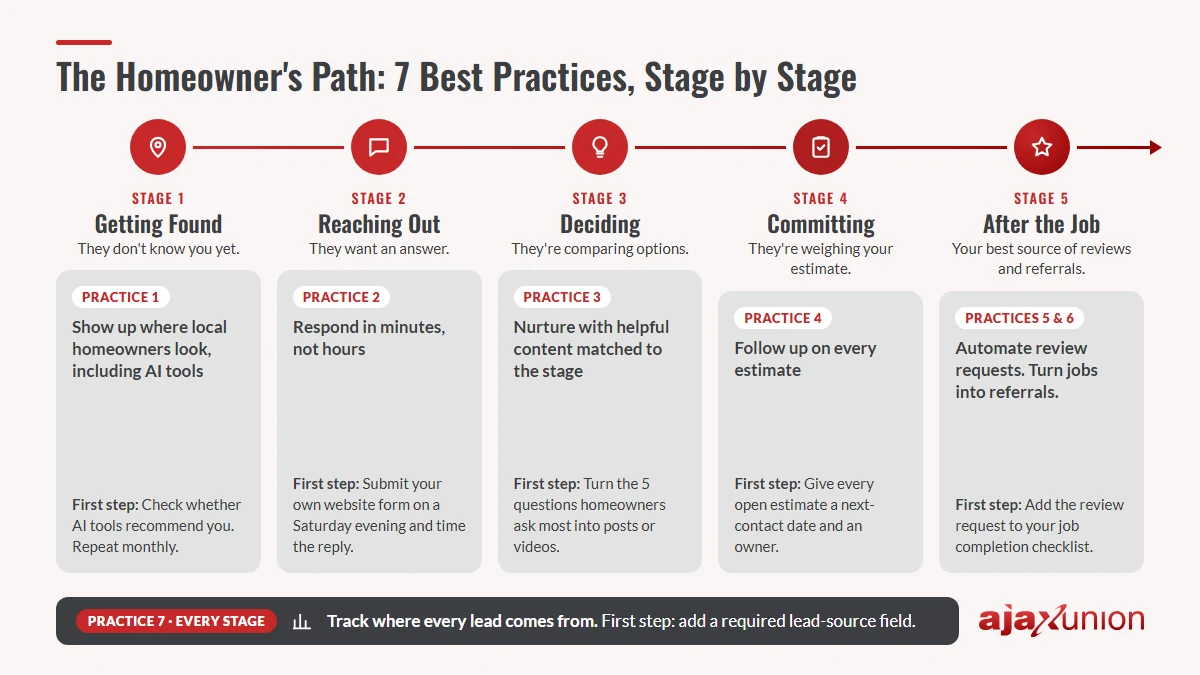
The Homeowner’s Path, in Five Stages
Not every homeowner who sees your yard sign is ready to sign a contract. Many are thinking about painting someday. Fewer are actively comparing companies. Only a handful are ready to book today.
The most common mistake is sending a “get your free estimate now” message to someone who’s only starting to think about it. Match your message to where they are:
- Getting found: they don’t know you yet.
- Reaching out: they’ve contacted you and want an answer.
- Deciding: they’re comparing options and building confidence.
- Committing: they’ve had an estimate and are weighing it.
- After the job: they’re your best source of reviews, referrals and the next project.
The seven best practices below map to these stages.
Stage 1: Getting Found
1. Show Up Where Local Homeowners Look, Including AI Tools
When a homeowner needs their exterior repainted, they search Google, check reviews, ask neighbors, and more often, ask an AI assistant like ChatGPT or Gemini to recommend a painter. Your job is to be visible and consistent in all of those places.
Start with the basics:
- Keep your Google Business Profile complete and active. Add fresh project photos regularly, keep hours and service areas accurate, and make sure your address and phone match your website exactly.
- Get listed consistently. The same business name, address and phone number across directories and review sites gives both homeowners and AI tools more places to find and trust you.
- Keep two social profiles active. Pick the platforms your customers actually use, post weekly and reply to comments within a day. A dormant profile can do more harm than having none.
- Make every job site work for you. A yard sign with a QR code, plus a short note to neighbors letting them know about the work and how to reach you, turns one project into local visibility.
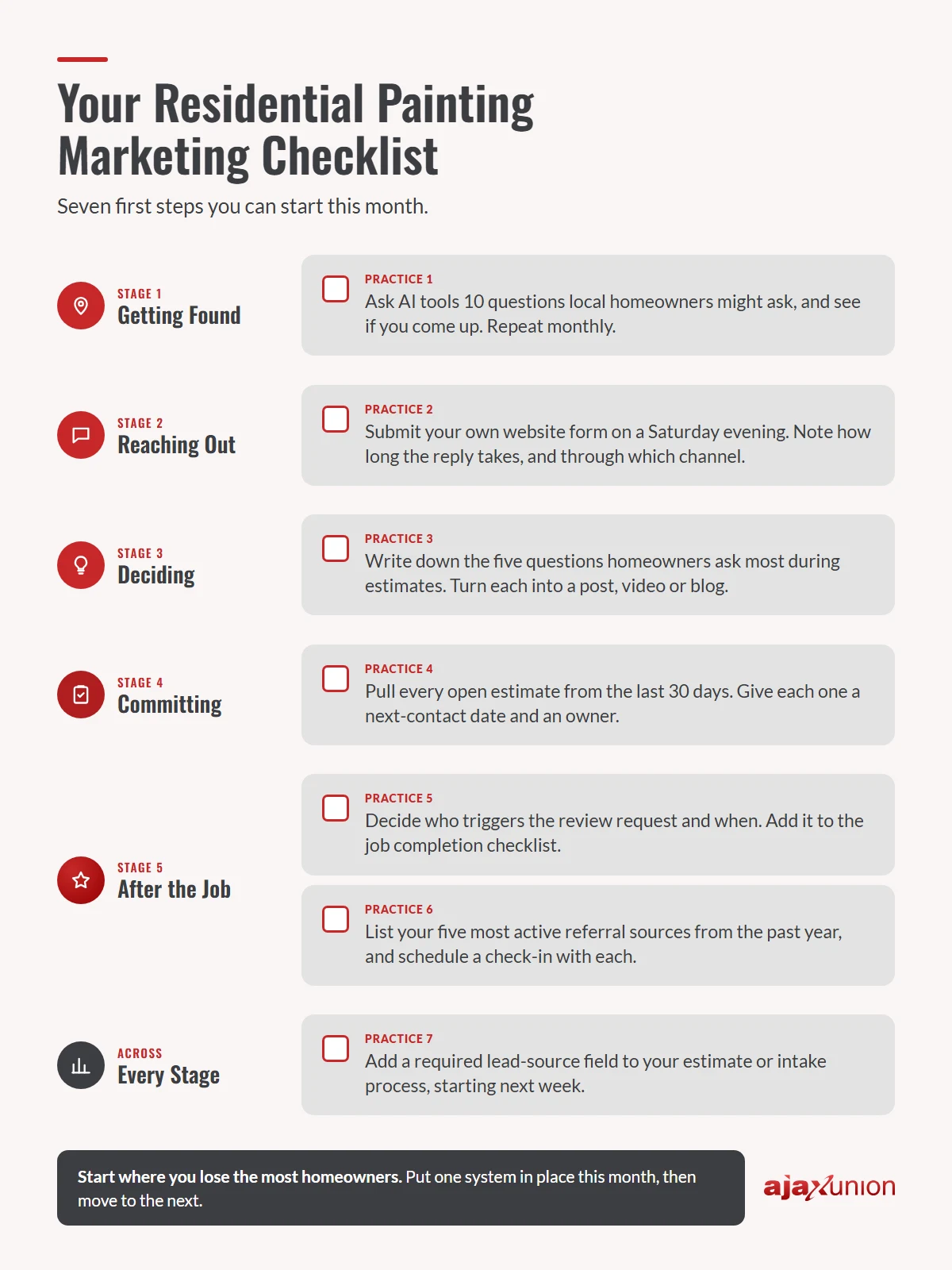
First step: Write down 10 questions a homeowner in your area might ask an AI tool, such as “Who’s a good cabinet painter near [your town]?” Then ask a friend to type a few into their own ChatGPT, logged in as themselves rather than as you, and see whether your company comes up. Repeat monthly.
Stage 2: Reaching Out
2. Respond in Minutes, Not Hours
A homeowner who reaches out and hears nothing moves on to the next company. If you paid for that lead through ads, mailers or a directory, a slow reply wastes that money.
Speed is easier when you aren’t relying on whoever happens to be near the phone:
- Send ad leads straight into your CRM. Facebook and Instagram lead forms already include the homeowner’s contact details, so follow-up can start right away.
- Use automation for the first reply. An instant text confirming you got their request, with a link to book an estimate, covers nights and weekends.
- Consider an AI assistant for intake. An AI text assistant can answer “Can you paint my kitchen?” at 11 p.m., ask about the project type and zip code, and offer estimate times. Set a rule to alert a manager when a conversation looks like a large project.
When a person does connect, use a short intake script:
- Ask how they found you, and get specific: the exact words they searched, or what they asked an AI tool.
- If someone referred them, note who, and thank that person.
- Confirm the appointment by text and email, and explain what happens next.
First step: Submit your own website form on a Saturday evening. Note how long it takes to hear back, and through which channel.
Stage 3: Deciding
3. Nurture With Helpful Content Matched to the Stage
Most homeowners aren’t ready to book the first time they find you. Top-of-funnel content should answer their worries and questions, not push for a sale. Topics like “mistakes homeowners make when hiring a painter” or “how to choose an exterior color for a brick ranch” build trust before the estimate.
How to put it into practice:
- Separate your lists. Past customers, new inquiries and people who are moving each need different messages. A homeowner listing their house is a natural painting prospect.
- Use comment-to-DM automation. A post invites people to comment a keyword like “kitchen.” The comment triggers a direct message with a short video and an option to join your email list.
- Get comfortable on camera. Short, real videos from your team often build more trust than polished ads. A 30-second clip of a prep walkthrough or a before-and-after reveal is enough.
- Act local. Feature homes and styles common in your area, your own crews, and local businesses you work with.
First step: Write down the five questions homeowners ask most during estimates. Each one is a social post, a short video or a blog topic.
Stage 4: Committing
4. Follow Up on Every Estimate
Many estimates aren’t lost on price. They’re lost to silence. The homeowner gets busy, the paperwork sits on the counter, and no one checks in.
Turn the estimate and what follows into a process:
- Ask for the job at the estimate. Most homeowners won’t say yes on the spot, but some will, and asking shows you’re serious.
- Lead with what makes you different. Put your warranty and your process at the top of the proposal, not in a footnote.
- Show financing if you offer it. A monthly payment next to the total can answer “I need to think about it” before it’s said.
- Follow a written cadence. Plan roughly two weeks of follow-up that mixes text, email and phone calls. For example: a thank-you text the same day, a check-in call a few days later, an email that answers common questions, and a final call near the two-week mark. Make each touch useful, not “just checking in.”
First step: Pull every open estimate from the last 30 days and give each one a next-contact date and an owner.
Stage 5: After the Job
5. Automate Review Requests, With a Check-In First
Reviews do much of the trust-building for a painting company. The challenge is asking consistently when crews are busy moving to the next job.
A simple system works like this:
- When the job wraps, send a short text asking how everything went.
- If something isn’t right, your office follows up and fixes it.
- Send every homeowner a one-tap link to your Google review page, whatever their answer.
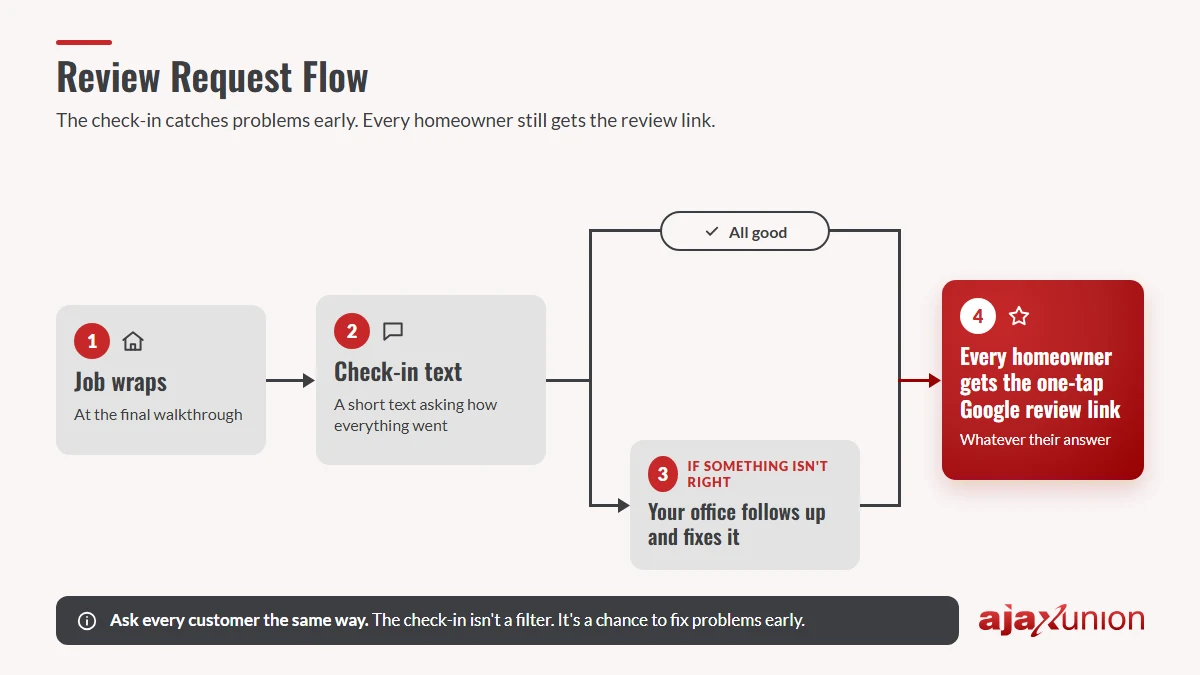
Ask all customers the same way. Google’s review policies prohibit discouraging negative reviews or asking only happy customers for them. The check-in isn’t a filter. It’s a chance to catch and fix problems while they’re still easy to fix.
First step: Decide who triggers the request and at what moment, such as the final walkthrough. Until it’s automated, make it a line on the job completion checklist.
6. Turn Finished Jobs Into Referrals and Repeat Work
A finished job is the start of your next lead. Satisfied homeowners, the neighbors who watched the work, and the local pros you collaborate with can all send you business.
Ways to build on it:
- Make your referral program visible. Mention it in your completion message, on invoices and in your emails, and make sharing easy.
- Send a project summary later. A few months after completion, send a note listing the paint products, colors and sheens used, with a thank-you and a referral reminder. It’s useful for touch-ups and keeps you top of mind.
- Build referral partnerships. Realtors, interior designers, roofers and flooring installers often meet homeowners before they ever search for a painter. Keep a named list and stay in touch.
- Treat your best customers differently. A small share of customers often brings in a large share of repeat work. Identify them, and call the ones likely to start another project.
First step: List your five most active referral sources from the past year and schedule a check-in with each.
Across Every Stage
7. Track Where Every Lead Comes From
Without lead tracking, every marketing decision is a guess. You can’t tell whether door hangers, Google Ads or the van wrap produced last month’s jobs.
Put these basics in place:
- Record the lead source on every estimate: where the lead first came from and the last touch before they reached out.
- Use tracked phone numbers or QR codes on vans, yard signs and mailers, so you can see which ones produce calls.
- Add a “How did you hear about us?” field to your website form.
- Name one person who owns marketing each week, and review results every quarter.
Once sources are tracked in your CRM, you can see your cost per lead, which channels produce booked estimates, and where to shift budget.
First step: Add a required lead-source field to your estimate or intake process starting next week.
Where to Start
You don’t need to fix all seven at once. Pick the stage where you lose the most homeowners, whether that’s slow replies, estimates that go cold or reviews you forget to ask for, and put one system in place there this month. Then move to the next.
The common thread is consistency. Most of these practices aren’t hard. They’re just easy to skip on a busy week, which is why they work best when they run on a schedule or an automation instead of someone’s memory.
Planning ahead? Our guide to building your 2027 marketing plan walks through setting priorities for the year.
Build the System Once, Then Let It Run
If you’d like help putting these steps in place, Ajax Union works with painting companies to set up the follow-up, review requests, lead tracking and intake that keep inquiries from slipping through. Ajax Union Martech brings your CRM, automations and AI tools into one place, so your team can follow up like a much larger operation.
Explore Ajax Union Martech or contact our team to talk through where your marketing is losing homeowners today.